
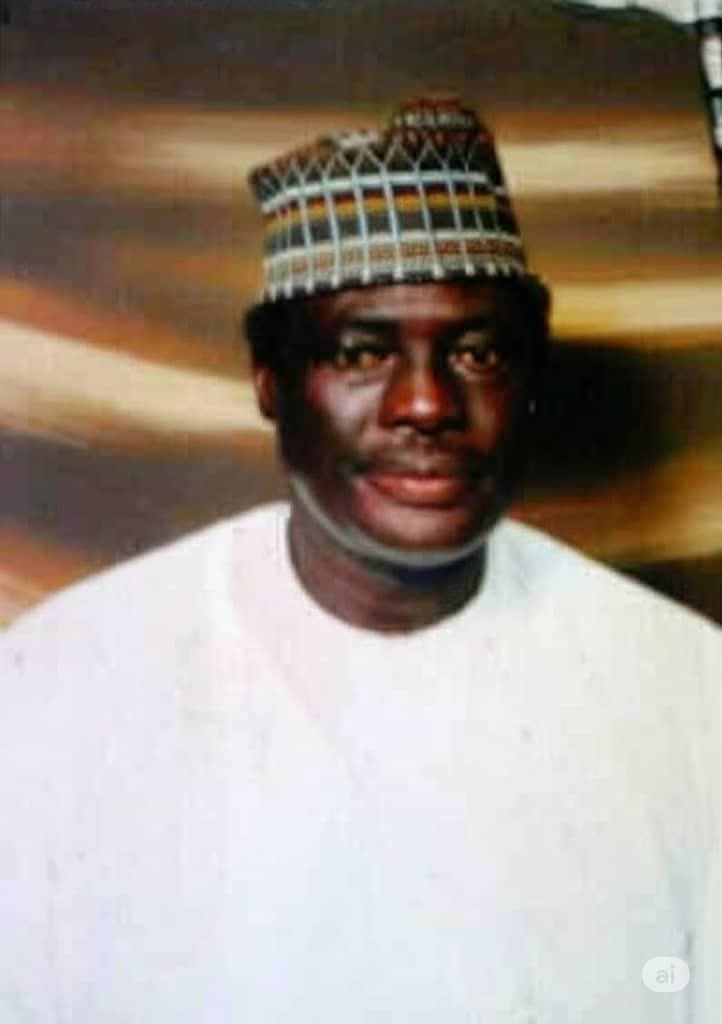
By: Hauwa Noroh Ali
As I drove out of the Immigration Headquarters in Sauka, Abuja, I couldn’t help but swell with pride, more than the kind that comes from simply holding a passport.
It was just after Father’s Day, and the reflections were deep. Even in death, the man I still call Daddy had once again made his presence felt—not through noise, but through legacy.
Alhaji Muhammadu Damulak, the last to bear the title Director of Immigration Services, was not just a leader. He was a builder of dreams and institutions, a true servant of the Nigerian spirit.
Born in KWA district, Qua’an-Pan LGA of Plateau State, his roots ran deep in the soil of a diverse and vibrant nation. But his vision stretched even further—beyond tribe, beyond origin, into the heart of what Nigeria could become.
He was a man who showed up early every day. Who called every command centre for updates, ensuring that no issue was overlooked, no human concern dismissed. Every name mattered. Every problem found follow-up. Alphabetically. Systematically. Compassionately.
When Damulak served from 1985 to 1990, Nigeria’s Immigration Department was just another government body. But under his hand, it became a force—a symbol of pride and autonomy. He didn’t let the institution define him. He defined the institution.
He believed strongly in building institutions and not individuals, because individuals come and go, but an institution built with vision and integrity will stand the test of time and continue to grow. To him, it wasn’t about leaving a mark for himself, but about laying a foundation for generations.
It was under his watch that:
The Immigration Headquarters moved from Lagos to Abuja in 1986, signifying a shift in power and modernity.
The issuance of Nigerian passports was centralised in 1988, restoring order, integrity, and sovereignty.
The department became a paramilitary force, equipped not just with arms, but with vision, self-governance, and a defined role in national security.
The Customs, Immigration and Prisons Services Board was established, bringing structure and professionalism that endures to this day.
But his greatest legacy? The heart he carried into the role. A story told by a grateful officer, Caroline Adepoju, who would later rise to become the Comptroller General of Immigration, captures the essence of Damulak’s open-door policy.
She and her father had never met him before. It was a chance sighting of a door labelled Director of Immigration at the Federal Secretariat that prompted her father to request an audience.
They were welcomed in, and her father humbly asked for help concerning employment. Damulak, without hesitation, opened his drawer, scribbled a note on a complimentary card to the Secretary of the Customs, Immigration and Prisons Services Board, and handed it over.
That simple, sincere gesture changed her life. No questions of tribe. No gatekeeping. Just a man of vision, creating space for merit and possibility.
He often said, “The perks belong to the office, not to me. I enjoy them only because I occupy the seat. Once I leave, the perks stay behind.”
To him, public service wasn’t an entitlement. It was a sacrifice. His detachment from power was as striking as his grasp of it.
He poured his wisdom like water—generously, deliberately.“Your cup isn’t for decoration,” he told us. “Pour it out into people’s lives.”And pour he did—into officers, into friends, into strangers who now carry his values forward.
He saw Nigeria not just as it was, but as it could be. A nation where opportunity didn’t bow to tribalism. Where excellence trumped favouritism. Where institutions served people, not the other way around.
Today, his name sits among the ancestors of the Immigration Service, spoken with reverence by those who wear the uniform with pride.
Muhammad Babandede, one of his successors, openly credits him as a foundational mentor. Not for grand speeches, but for silent, steady revolution.
So here’s to Alhaji Muhammadu Damulak—a man who loved this country not with slogans, but with service. A man whose door was open to all. Whose work still speaks, long after his voice has gone quiet. A man who didn’t just carry the flag—he lifted it.
May his memory forever inspire those who believe that Nigeria can rise—on merit, on heart, and on the shoulders of true patriots like him.