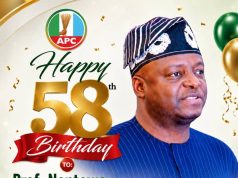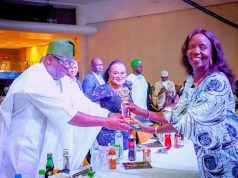






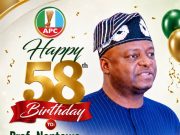


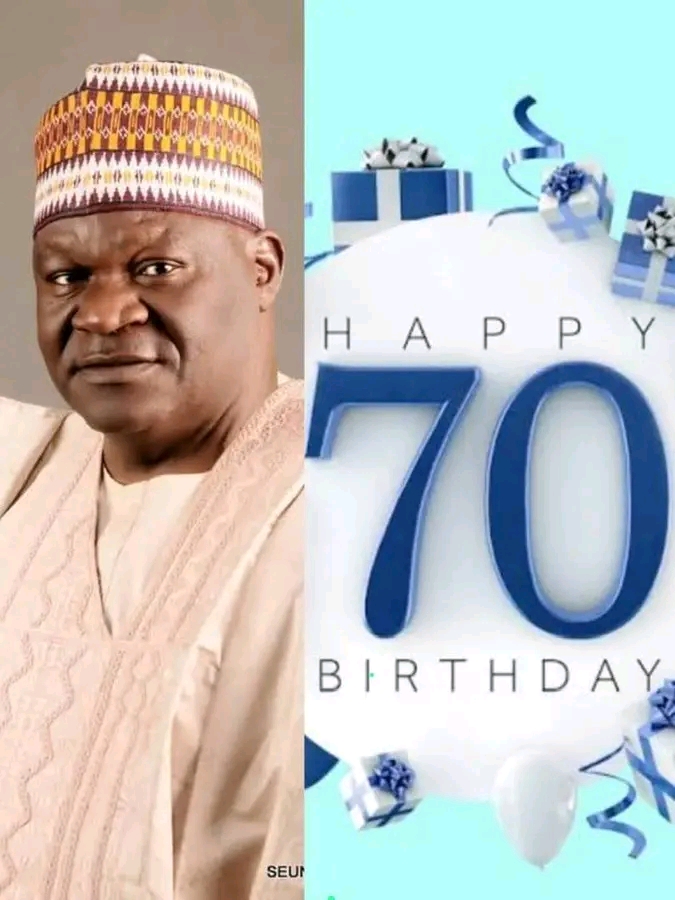
As Hon. Nanven Nimfel turns 70, tributes are pouring in for a man widely regarded as one of the quiet stabilising forces in Plateau politics and beyond, a leader whose humility has defined his public life more than any title ever could.
For Professor Elias Nankap Lamle, the story of Hon. Nimfel’s character dates back nearly five decades.
Their first meeting was in 1978, during a Christ Crusade fellowship outreach to Kadarako in Wase Local Government Area of Plateau State. A young Lamle was assigned to stay with the Nimfel family in Langtang. What he encountered, he recalls, was not mere hospitality but warmth that made him feel like family.
Nanven Nimfel welcomed him as a brother. They shared a room, exchanged long conversations into the night, and from that early encounter, one trait stood out: his humility.
Even within the Christ Crusade fellowship led by the respected Pastor Dole Dandam, Nimfel’s modesty was notable. He was never loud, never self-promoting, and never eager for the spotlight. His humility, those who knew him say, was not performative. It was natural and deeply rooted.
Their paths crossed again in 1983 during the era of the Nigerian Peoples Party (NPP), when Solomon Lar was Governor of Plateau State. Lamle served as a supervisory agent of the NPP, while Hon. Nimfel held the position of Director of Research and Documentation.
In the often tense and competitive environment of partisan politics, Nimfel distinguished himself through intellectual discipline and restraint. Colleagues describe him as meticulous, thoughtful, and committed to policy clarity rather than political theatrics.
Years later, the two met again at the National Institute for Policy and Strategic Studies (NIPSS), Kuru. Lamle had been invited as a facilitator to present a paper on conflict and peacebuilding, while Nimfel was participating in the Senior Executive Course.
Despite differences in age and professional trajectory, Nimfel’s disposition remained unchanged. He openly celebrated Lamle’s academic achievements and offered encouragement without condescension. In a society where hierarchy is often emphasised, Nimfel chose affirmation over intimidation.
Observers say one of Hon. Nanven Nimfel’s enduring contributions to Nigerian politics is his example of detribalised leadership. In a nation frequently divided along ethnic and religious lines, he has consistently related to people beyond identity markers. Associates note that his friendships and support networks cut across tribes, religions, and social classes.
Unlike many political figures whose careers are marked by shifting allegiances and public grandstanding, Nimfel’s record reflects steadiness and principled engagement. As Director of Research and Documentation during the NPP era, he emphasised the importance of ideas, documentation, and policy substance in governance.
At 70, admirers say his legacy is measured less by offices held and more by the consistency of his conduct. In an era where politics is often transactional and polarising, his life stands as a reminder that public service can be anchored in sincerity.
For Lamle, the connection is deeply personal.
“From him, I copied many virtues, humility in success, generosity without discrimination, steadiness in public life, and respect for others irrespective of status,” he said. “His life has been a quiet tutorial in leadership.”
As Hon. Nanven Nimfel celebrates seven decades, many believe his greatest contribution may not lie in political achievements alone, but in the values he continues to model, humility, inclusiveness, and integrity.
In a country like Nigeria yearning for principled leadership, Hon Nimfel’s journey offers a compelling example that quiet strength can leave a lasting imprint.
Prof Elias Nankap Lamle, PhD (Leuven), is a Professor of Anthropology of Conflict Management and Peace Studies at the Centre of Conflict Management and Peace Building, University of Jos. He also serves as Lead Consultant with the International Institute for Sustainable Development (IISD), Canada, focusing on integrating peacebuilding strategies into climate change responses in Nigeria. His work spans conflict studies, governance, sustainable peace, and climate security.