










The Tarok people predominantly inhabit Langtang North and Langtang South Local Government Areas of Plateau State, Nigeria. They are also found in at least eight other Local Goverbmebt Areas across both the Southern and Central zones of the state. While their exact population remains a subject of academic debate, the 1991 National Census projected their number at approximately 450,000. However, an independent UNDP survey in 1992 estimated the global Tarok population to be around 1.2 million, a figure that remains unverified due to the exclusion of ethnicity, religion, and gender data in the 2006 census.
Outside Plateau, the Tarok have significant populations in Taraba, Nasarawa, Kaduna, and Bauchi States. These communities, though initially some are migratory, while others are indigenous in their respective locations.
The Tarok are organized into over sixty autonomous sub-clans and families, each preserving exclusive cultural rights,identity and traditional practices. The Ponzhi Nbin, the spiritual and political leader of a sub-clan, traditionally held absolute authority prior to colonial intrusion. Alongside the Council of Elders, which wielded executive, legislative, and judicial powers, the governance of Tarok society reflected a confederal socio-cultural system bound by shared language, myths, customs, and folklore.
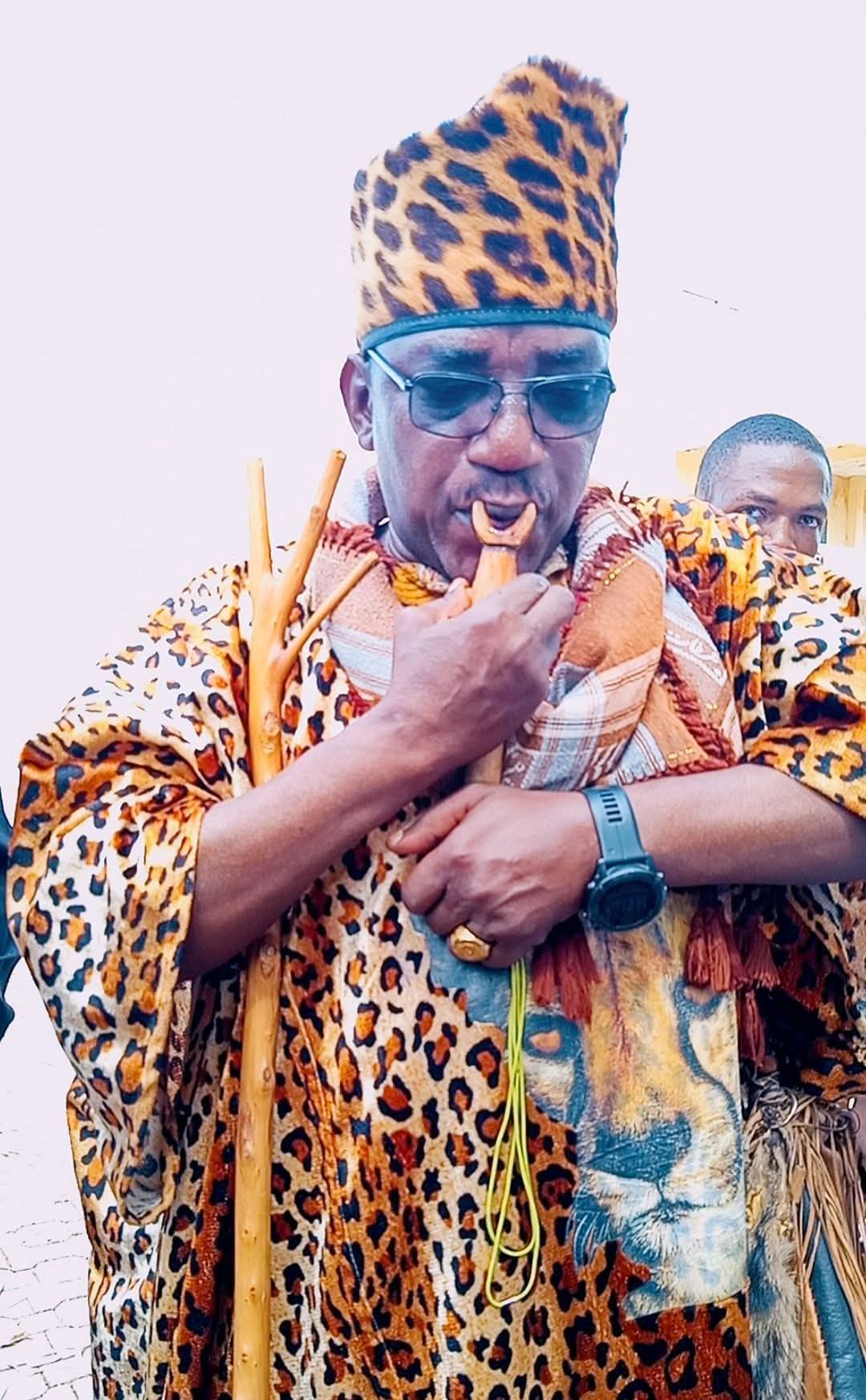
Anthropologically, the Tarok belong to the Benue-Congo ethnic classificattion. Some historical accounts suggest Bantu origins, and striking similarities with Bantu cultural traits, such as the use of leopard skins, deferred mourning rites (iku inaknak), thatch roofing, dances, and attire, support this theory. During the 1961 Congo peacekeeping mission, Tarok soldiers observed cultural affinities with certain Congolese Bantu communities, prompting scholarly curiosity that remains underexplored.
The Institution of Marriage in Tarok Culture
Marriage, referred to as “Ikam Uchar,” is highly revered in Tarok culture. It symbolizes maturity and responsibility. Upon undergoing initiation nyam Orim, young men are guided by elders on family life. The transition from boyhood to manhood is socially recognized through the age-grade system known as imwol, determined by group circumcision rather than individual birth records. Circumcision, traditionally performed from age ten upward, is celebrated with unique festivals and managed by hereditary specialists. Notably, the practice of circumcision after seven days is considered alien, linked to Judeo-Christian influences.
An unmarried adult male is called “Unimpkari.” The term carries a social stigma, especially when used by women to mock men who delay marriage. If a man continues into old age without marrying, he is encouraged or compelled to establish his own home and face the rigors of independent life. The ridicule peaks is usually at unimkpari’s funeral. Women known as “Ocha ga’a ijam” (play partners) dramatize the funeral procession, raining insults and pouring ashes while rolling a symbolic stone (Igbongbar) to signify his failure to fulfil social expectations. This ritual reinforces marital responsibility and shames the family for tolerating such dereliction.
Stages of Tarok Traditional Marriage
The marriage process begins when a young man (uyen zem) spots an unmarried woman (uyenben), often at markets, farms, or communal gatherings. Advances are made subtly through body language, eye contact, head nods, and hand gestures. If the woman shows reciprocal interest, the man offers a toasting gift, traditionally unspecified, but now commonly including toiletries, soap, and creams.
The gift is given to the lady who inturn present it to her mother, who interrogates her daughter before informing the father. Acceptance of the gift secures the man’s “toasting rights,” though not exclusively, becsuse multiple toasting is allowed under tarok tarditions. Thereafter, an openly convened ceremony, where a traditional opportunity is created for the lady to mmake a choice. In the past, a woman could have up to multiple suitors; today, Christian influence and monogamous norms have reduced this practice.
Once a suitor is chosen, the man presents a second set of gifts known as nvok igya, including wrappers, headgear, undergarments, and bathroom slippers. Acceptance of these gifts, without maternal objection, marks the beginning of courtship. This stage, now often replaced with a modern “introduction” ceremony, grants the suitor visiting rights, though premarital sexual conduct is strictly forbidden. Violation results in termination of engagement and return of gifts.
Bride Wealth and Engagement Process
The bride price process commences with the procurement of items for the to be bride: clothing, rice, sesame (izhin), and local spices (azul, ananjyol). The groom to be also constructs a round hut called ijini, serving as a guest room during and after courtship, symbolizing privacy and bonding, known as nap ngya.
An intermediary (Nimsel) manages the engagement process, termed nim igwar. The groom must also present maternal bride wealth to the bride’s mother, depending on the clan and family, four to twelve wrappers, basins of izhin and azul, and a bag of rice. For the father-in-law, a full agbada outfit with shoesand cap to fit is mandatory. Also communual labour of at least 30 young men is mobilized to farm for the father-in-law, demonstrating commitment and capacity to take care of the bride to be.
The climax is the presentation of adir khaa godo which is the delivery of 30 traditional hoes and a textile blanket to the bride’s maternal uncles. This rite validates the marriage. Without it, the union is not traditionally recognized, and any children born from a union without these rites are considered to belong to the maternal lineage.
Elope and Final Rites
Under tarok traditions there is no formal date that will be fixed for taking the bride. Instead, the couple plan on the the date and time to elope by night. The next day after eloping, the groom’s family sends emissaries with a gift, known as atiba igwar, to inform the bride’s family. Rejection or even violent response by the bride’s family is considered normal and, paradoxically, a sign of blessing.
In modern times, many of these rites have been monetized, with fixed cash equivalents replacing traditional gifts. While some argue this simplifies the process, others see it as commodifying human relationships and diluting cultural dignity. Nonetheless, vestiges of these customs persist, particularly in rural communities.
The Tarok marriage system is a profound cultural institution steeped in symbolism, social responsibility, and communal values. Though modern influences have reshaped many of its expressions, its core principles, honour, responsibility, and family continuity remain vital to Tarok identity.
Solomon Dalung, LLM, LLB, BL
Igbarman Otarok, Dike Egwureogwu & Garkuwa Arewa
Voice of the Silent Majority
igbarman@gmail.com